Ahsan HabibWork

Work with a purpose.

I build software, investigate questions and design ways for learning to stick. Six pieces of work, each told as a question, a contribution, an approach and an outcome.

Fig. 01Software engineering · BrainCore

01Software engineering · BrainCore

Connecting the parts of a learning platform

Content, permissions, activities, results and reports: the quiet work behind learning and assessment is making them fit together.

The question
Educational software brings different users and workflows into the same system. A change to one part often affects several others.
My contribution
Since January 2018 I have developed and maintained services for BrainCore’s learning and assessment software, including ELIA; today as an independent senior full-stack developer for BrainCore Sàrl.
The approach
Work across React interfaces, Node.js and Python services, MongoDB data and APIs, following a feature through its access rules, calculations and reports.
The outcome
More than eight years of continuous development across learning workflows, analytics and reporting. This is my professional work for BrainCore, separate from PearlHelix.
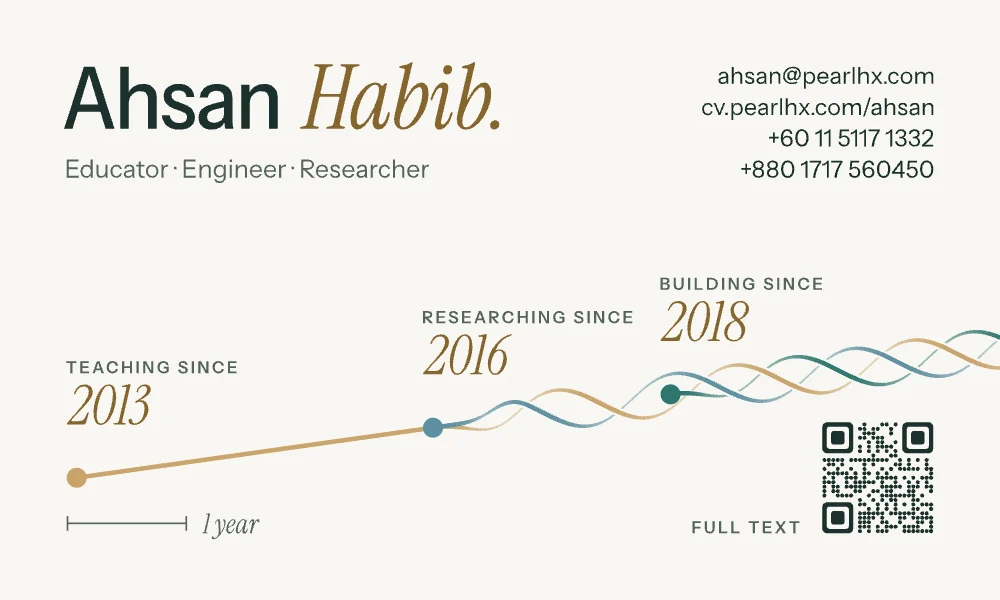
Fig. 02Learning research · Universiti Malaya

02Learning research · Universiti Malaya

Making an abstract idea something you can do

Physical games that let learners act out programming and computational-thinking concepts before returning to code.

The question
Ideas such as sorting, variables and algorithmic steps can be difficult to grasp through explanation alone.
My contribution
I helped design and evaluate physical learning activities and developed a recommender as part of my master’s research.
The approach
Connect elements in students’ code with classroom activities; observe participation and gather feedback alongside performance measures.
The outcome
A master’s thesis, a 2017 conference paper and a 2021 journal article, with shared Gold Award recognition for the physical-games work.
Read the journal article
Fig. 03Applied machine learning · Universiti Malaya

03Applied machine learning · Universiti Malaya

Finding patterns in cultural heritage

Classification and retrieval experiments with 3D representations of Kendi artefacts.

The question
Collections of cultural objects raise practical questions about how to represent shape and retrieve related examples from limited data.
My contribution
As a graduate research assistant, I developed machine-learning pipelines for classifying and retrieving 3D Kendi artefacts.
The approach
Explore representations and feature extraction, compare classification methods and examine how dataset size changes model performance.
The outcome
Research implementations and project reports that informed further questions about data, representation and fair model comparisons.
Fig. 04Collaborative research · ShonaBondhu

04Collaborative research · ShonaBondhu

An early warning question, at system scale

A cloud-based research system for monitoring water levels and exploring flash-flood warning.

The question
Flash-flood monitoring needs observations from multiple locations and a way to interpret changing conditions.
My contribution
I contributed within the North South University research team and co-authored the 2016 ShonaBondhu conference paper.
The approach
The project combined distributed sensing and server-side processing, using physical sensors and emulated nodes to explore system behaviour.
The outcome
A research system published at the 2016 International Conference on Networking Systems and Security.
Read the conference paper
Fig. 05Undergraduate thesis · North South University

05Undergraduate thesis · North South University

Learning to reason about uncertain signals

An investigation of Hidden Markov Models for intrusion detection in cloud networks.

The question
Network activity is sequential, and an isolated observation may not reveal the pattern behind it.
My contribution
My undergraduate thesis investigated a probabilistic model for detecting and analysing intrusions in a simulated cloud environment.
The approach
Use Hidden Markov Models with Viterbi and Baum–Welch algorithms to study patterns in network observations.
The outcome
A simulation-based thesis that developed my foundations in probabilistic modelling and experimental evaluation.
Fig. 06Independent venture · Systems and advisory

06Independent venture · Systems and advisory

Building PearlHelix, one clear step at a time

A place to bring my experience in education, engineering and research to practical problems of learning and work.

The question
A technology decision often begins with an unclear need: what should change, what already works and whether software is the right next step.
My contribution
I founded and run PearlHelix as its proprietor, shaping the venture’s services and approach.
The approach
Start with the problem, agree a useful scope, then distinguish advice, technology choices and implementation. Consider AI or automation through a focused question and a reviewable trial.
The outcome
An independent venture offering learning and development advisory, technology consultancy and software development. Enquiries are welcome, including early ideas.
Visit PearlHelix

A conversation starts here

Let’s compare notes.

Whether it is a research idea, a system that needs untangling, a class to teach or a question you are still shaping, I would be glad to hear from you.

The printed card