TeachSince 2013
Ideas that take hold.
From laboratory benches at North South University to lectures at Universiti Malaya, I teach programming so that the reasoning, not just the answer, becomes the learner’s own.
TeachingEducatorEngineerResearcher
আহসান হাবীব
Three disciplines, one question: how does an idea take hold?
I build learning and assessment software, teach programming at university level and research when machine-learning results deserve our trust.
01The connecting thread
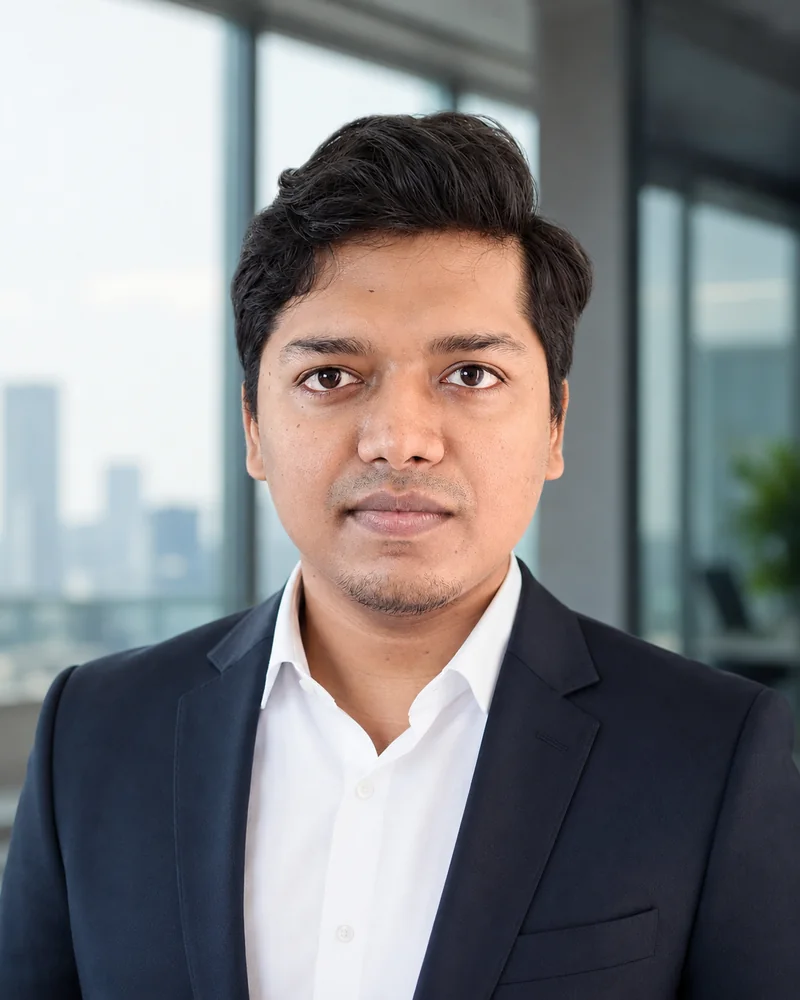
I trained in electrical engineering and computer science at North South University in Dhaka, then came to Universiti Malaya to research how people learn to think computationally. I never stopped doing all three things that path taught me: building, teaching and asking better questions.
For more than eight years I have built learning and assessment software, today as a senior full-stack developer working independently with BrainCore Sàrl. I teach programming and computer-science foundations, most recently as an external lecturer at Universiti Malaya. And as a PhD candidate, I research how machine-learning comparisons can stay honest.
In 2026 I founded PearlHelix, my own systems and advisory venture, to bring these strands to practical problems of learning and work.
From laboratory benches at North South University to lectures at Universiti Malaya, I teach programming so that the reasoning, not just the answer, becomes the learner’s own.
TeachingMore than eight years inside learning and assessment software: interfaces, access rules, activities, analytics and reports, each change traced through to the people it serves.
WorkResearch into how machine-learning results are compared: leakage, fair baselines, the resources a result really costs and the discipline of knowing when a search should stop.
ResearchRecognition
1st
Twice, in 2021 and 2023, leading Universiti Malaya teams in IEEE’s global 24-hour programming competition. Six national placements from 2020 to 2025.
The recordGold
For physical games that help students grasp programming concepts, recognised by Universiti Malaya’s teaching-innovation programme.
The workLead
Coordinating IEEEXtreme 20.0 across Malaysia in 2026: from competitor to the person helping the next teams compete.
Leadership02What I hold to
A correct answer without the reasoning is borrowed. I teach and build so that understanding becomes the learner’s own.
Sorting, a variable, a 3D vessel, a rising river: an idea lands when you can act it out, see it or hold it.
Leakage, related samples and uneven budgets can flatter a model. I check the comparison before I trust the conclusion.
In a search, in research and in life, more effort is not always more progress. Spending attention wisely is its own kind of intelligence.
I use AI and automation where they strengthen human judgement, and protect room for independent practice where they would quietly replace it.
Every permission rule, report and interface decides something about someone’s day. I keep that person in view.
03Selected work
A few threads from my work in software, education and research. Each starts with a different question.
The question I am pursuing now
Automated machine learning can try hundreds of model configurations. Improvements often slow well before the budget is spent, yet the search keeps consuming time, compute and energy. My doctoral research studies search-level stopping, deciding when enough has been learned, and how to compare such methods without leakage flattering the result.
Now · September 2026
Open doors
A conversation starts here
Whether it is a research idea, a system that needs untangling, a class to teach or a question you are still shaping, I would be glad to hear from you.